
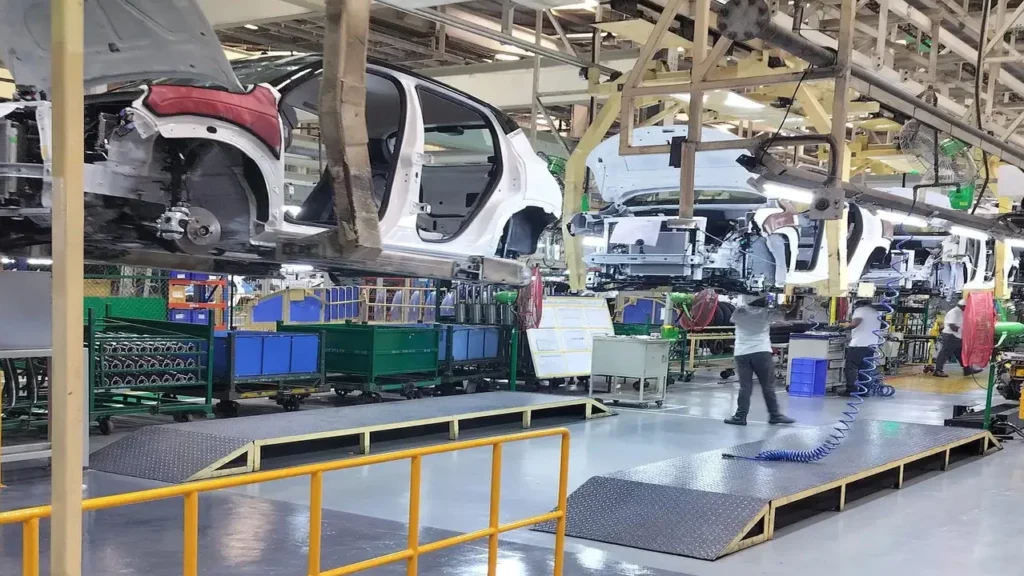
India’s auto components sector is undergoing a transformative shift, positioning the country as a global leader in manufacturing and supply chain integration. Backed by robust data, favourable policies, and evolving global dynamics, this industry is not just growing—it’s redefining its role in the global automotive ecosystem. As a business consultant tracking supply chain realignments, I see India’s rise as both timely and strategically pivotal.
A Market on the Move
India’s auto component industry has demonstrated remarkable growth, with exports surging 73% since FY21, reaching $12.8 billion in FY24, according to the Automotive Component Manufacturers Association of India (ACMA). This sustained upward trajectory reflects deeper structural shifts:
- Key Verticals Driving Growth: Three segments—Drive Transmission Systems, Engine Components, and Electricals & Electronics—account for over 50% of exports. These high-value categories underscore India’s growing sophistication in Tier-1 manufacturing.
- Global Market Penetration: Exports are increasingly directed toward North America and Europe, which collectively absorb a significant share of India’s output. This diversification highlights the global acceptance of Indian quality standards, supply reliability, and cost competitiveness.
Data from NITI Aayog further validates this trend, projecting the industry to reach $80 billion by 2026, driven by both domestic demand and export growth. This isn’t just about numbers—it’s about India’s ability to deliver precision-engineered components that meet stringent international standards.
India’s Role in the Global Supply Chain Reset
The global automotive supply chain is undergoing a seismic shift, spurred by the COVID-19 pandemic, geopolitical tensions, and the urgent need for diversification. The China+1 strategy has transitioned from a buzzword to a boardroom imperative, with global OEMs and Tier-1 suppliers actively seeking alternatives to traditional sourcing hubs. India is seizing this opportunity, leveraging
- Skilled Engineering Talent: With over 1.5 million engineering graduates annually, India offers a deep talent pool for design, R&D, and manufacturing.
- Cost-Effective Ecosystems: Manufacturing clusters in Pune, Chennai, and the National Capital Region (NCR) provide integrated vendor bases, reducing logistics costs and enhancing scalability.
- Supply Chain Resilience: India’s stable political environment and diversified supplier network position it as a hedge against supply chain disruptions.
A recent report notes that 60% of global OEMs are exploring India as a primary sourcing destination, up from 35% in 2020. This shift validates India’s growing role as a strategic partner in global value chains, particularly for high-precision components.
Policy Support: Catalysing Growth
Government initiatives are aligning with industry needs to sustain this momentum. The Production Linked Incentive (PLI) scheme, with an outlay of ₹25,938 crore for the automotive sector, incentivizes deep localization and reduces import dependence. Additionally, NITI Aayog’s 2024 report recommends:
- Targeted Fiscal Incentives: Tax breaks and subsidies for export-oriented units.
- Expansion of Auto Clusters: Developing large-scale manufacturing hubs to enhance economies of scale.
- R&D Investments: Support for innovation in emerging technologies like e-mobility and software-defined vehicles.
These policies create a predictable and investor-friendly environment, fostering joint ventures, technology transfers, and foreign direct investment (FDI). In FY24, the auto components sector attracted $2.1 billion in FDI, a 30% increase from FY23, per the Department for Promotion of Industry and Internal Trade (DPIIT).
The EV Opportunity: A Parallel Growth Curve
While traditional internal combustion engine (ICE) components dominate today’s exports, the global transition to electric vehicles (EVs) presents a new frontier. Emerging segments like battery management systems (BMS), electric drive modules, and power electronics are reshaping the landscape of auto components.
India’s EV market is projected to grow at a CAGR of 43% through 2030. To capitalise on this, Indian manufacturers must:
- Build R&D Capabilities: Invest in the creation of proprietary technologies and intellectual property (IP).
- Forge Strategic Partnerships: Collaborate with global EV leaders for technology transfer.
- Scale Production: Develop dedicated EV component clusters to meet rising demand.
Companies that act decisively—through acquisitions, partnerships, or greenfield innovation centers—will emerge as market leaders in this high-growth segment.
Strategic Imperatives for Stakeholders
To sustain and amplify this growth, business leaders, investors, and policymakers must focus on three priorities:
- Strengthen Supplier Development Programs: Enhance quality and compliance standards to ensure export readiness, particularly for Tier-2 and Tier-3 suppliers. Programs like Zero Defect, Zero Effect (ZED) can drive this transformation.
- Encourage M&A Activity: Consolidation among smaller firms will unlock scale, improve competitiveness, and attract global investment. In 2024, M&A deals in the auto sector rose by 25%.
- Accelerate Digital Adoption: Leverage Industry 4.0 technologies—such as predictive maintenance, IoT, and supply chain visibility—to build globally competitive firms. A study estimates that digital transformation can reduce operational costs by 15-20%.
The Road Ahead
India’s auto components industry is no longer just a low-cost sourcing hub—it’s a strategic partner in the global automotive value chain. With a potent mix of scale, skill, and supportive policies, India is poised to redefine global supply chains. As consultants, investors, and policymakers, we must recalibrate our strategies to not only ride this wave but actively shape its trajectory.
This isn’t just about manufacturing parts—it’s about unlocking potential, delivering precision, and securing positioning as a global leader. The time to act is now.